

WHY WE LOVE THE MUD
Thermal mud therapy, also referred to as peloid therapy or mud-pack therapy, is an ancient treatment form used in spas, veterinary settings, and wellness centers worldwide. Thermal Mud delivers this time-tested approach into modern animal care with a biologically active blend of natural clay, humic and fulvic acids, trace minerals, and soil-based microbes. Designed specifically for horses, dogs, and livestock, it helps reduce inflammation, accelerate tissue repair, and support skin health using only naturally derived ingredients.
Unlike geothermal spa muds, this formulation is biologically potent due to its composition—not its temperature. The mud delivers tangible healing benefits through microbial activity, mineral exchange, and enhanced circulation, making it ideal for topical application in everyday veterinary and animal recovery settings.
What’s in Thermal Mud?
Thermal Mud is formulated for performance and purity. It includes:
Natural clay, providing a smooth, stable base rich in calcium, magnesium, potassium, and iron
Humic and fulvic acids, organic substances known for their detoxifying, anti-inflammatory, and tissue-repair properties
Soil-derived microbial compounds, which support the skin microbiome and improve local immune responses
Trace minerals, which feed skin and connective tissues at the cellular level
Together, these ingredients create a warming, bioactive paste that works with the body’s own processes to support healing from the outside in.
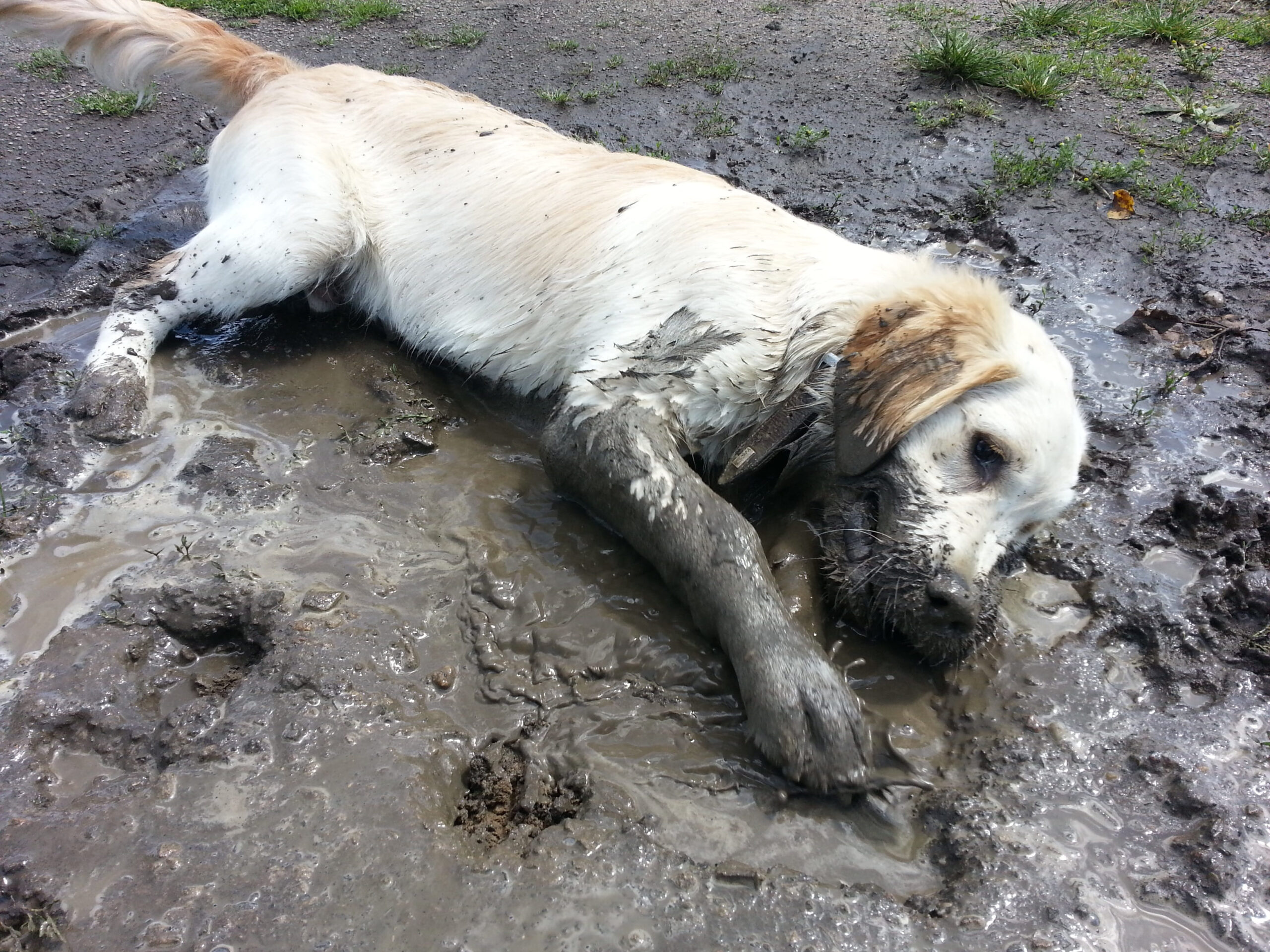
Informed by animal behaviour in nature
Accelerated Wound Healing with Humic Compounds
Humic and fulvic acids have long been studied for their regenerative properties, especially in wound care:
- In a controlled trial, rats treated with a 0.5% humic–fulvic poultice demonstrated faster wound closure, enhanced blood vessel growth, and reduced inflammation compared to untreated wounds.
- Another study using humic acid gel on oral mucosa showed quicker healing and lower inflammatory markers than conventional antiseptics.
These effects are attributed to increased fibroblast activity and better vascularisation—two key pillars of tissue repair. When applied consistently to superficial wounds, cuts, or post-surgical sites, Vermate’s Thermal Mud can significantly improve healing timelines and reduce complication risks.
A NATURAL, BIOLOGICALLY ACTIVE TOPICAL SOLUTION SUITABLE FOR MANAGING INFLAMMATION AND PAIN
Tissue Regeneration and Collagen Support
Beyond pain relief, Thermal Mud contributes to structural recovery by supporting collagen formation and tissue strength. Sodium humate, one of the key humic compounds, has been shown to activate the TGF-β/Smad signalling pathway—one of the body’s main regulators of tissue growth and repair.
This process encourages fibroblasts to produce new collagen, helping to rebuild tendon, ligament, and skin structures. In practical terms, animals treated with humate-based topicals often show faster recovery from strains, minor sprains, and overuse injuries.
Mineral Delivery and Local Circulatory Activation
Fulvic acid acts as a natural transporter, binding to minerals and carrying them across cell membranes where they’re most needed. When combined with the mineral-rich clay base of Vermate’s Thermal Mud, this allows for:
Improved oxygenation, via increased blood flow to applied areas
Enhanced detoxification, especially post-exercise
Cellular access to critical micronutrients, including iron, magnesium, and zinc
The mild warming sensation reported during use results from improved surface circulation, not added heat—making it safe for regular application in all climates.
Antimicrobial and Microbiome-Supportive Action
The humic and microbial elements in Vermate’s formulation play a protective role on the skin. Research shows that humic acids can inhibit the growth of harmful bacteria such as Staphylococcus aureus, Salmonella, and Pseudomonas, while also helping to stabilise the skin’s natural microbiome.
This is particularly valuable for animals with:
Recurrent skin conditions (e.g., greasy heel, rain rot)
Open wounds at risk of infection
Chronic dermatitis or irritation from allergens or moisture
By creating a physical and biochemical barrier, the mud offers both immediate relief and long-term protection.
Thermal Mud is a modern, research-backed healing tool that draws its strength from nature
There are no synthetic additives or artificial heat.
Natural support for inflammation and pain relief.
Proven acceleration of wound healing and tissue regeneration.
Microbial protection and skin microbiome support.
A gentle, mineral-rich alternative for joint recovery and soft-tissue care.
Love the Mud
Whether you’re treating an injury, supporting recovery, or simply maintaining skin and joint health in animals, Thermal Mud delivers effective, grounded care from the outside in.
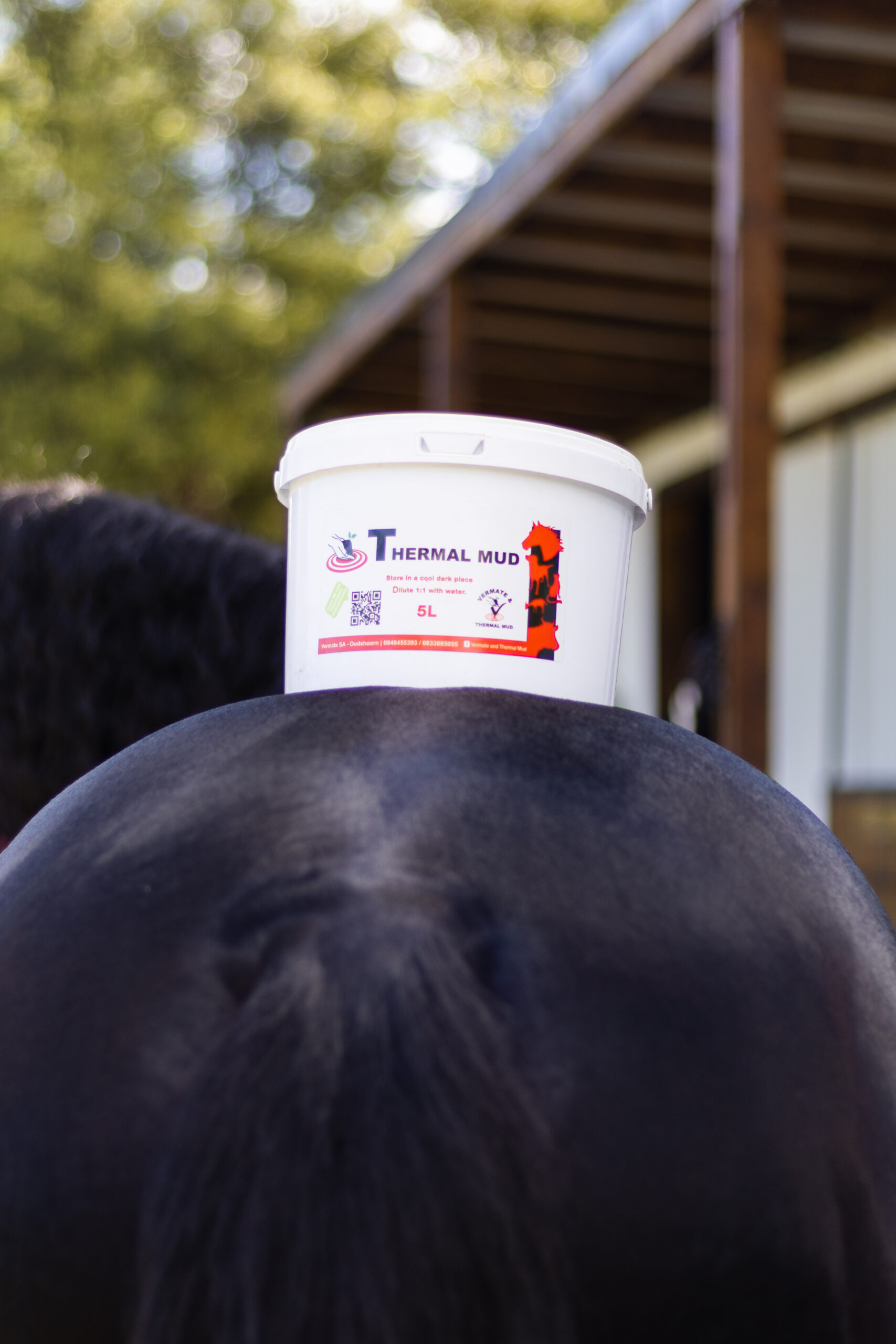
Application Guidelines and Common Use Cases
Wounds and Skin Damage
Apply a thick layer directly to the area after cleaning. Allow it to dry, rinse gently, and reapply twice daily.
Joints, Tendons, and Recovery
Dilute the mud 1:1 with clean water and apply post-exercise or over strained areas. Rinse off after drying.
Skin Conditions
Use undiluted mud on greasy heel, dermatitis, or similar conditions. Apply twice daily until resolved.
Swollen Legs or Fluid Retention
Cover the affected area with a thick coat and leave to dry. Repeat daily or as needed.
Small Animals (e.g., dogs)
Use on minor wounds, inflamed joints, or hotspots. Avoid eyes and mucous membranes.
Safety and Best Practices
-
- Always patch test first on sensitive animals
- Do not apply to open bleeding wounds unless advised by a vet
- Avoid wrapping tightly over fresh mud; allow skin to breathe
- Store sealed and away from direct sunlight
- For best results, pair with internal support (like Vermate oral supplements) when managing chronic inflammation
The Sarcoid Solution
Understanding Sarcoids and Bovine Papillomavirus
Sarcoids are the most common skin tumors affecting horses, donkeys, and mules. These benign yet locally invasive growths are strongly associated with infection by bovine papillomavirus types 1, 2, and possibly 13 (BPV1, BPV2, BPV13). The virus infects equine skin cells and causes uncontrolled proliferation of fibroblasts, leading to tumor formation.
Although sarcoids are not contagious between horses, they often develop at sites of previous injury or irritation where the virus can enter the skin more easily. This highlights the importance of careful wound management and skin care in preventing and controlling sarcoid development.
How Thermal Mud and Vermate Work Together
Combining Thermal Mud with Vermate offers a holistic approach to managing sarcoids:
Topical Support with Thermal Mud
Thermal Mud enhances circulation, reduces inflammation, and provides antimicrobial benefits to create an environment conducive to healing. Applied directly, it soothes irritated skin and supports tissue repair.
Internal Support with Vermate
Vermate is administered orally and supports systemic detoxification and immune function, helping the body better manage viral infections and promote overall health.
Synergistic Effects
The combination addresses both local skin health and systemic wellbeing, improving the chances of successful sarcoid management.
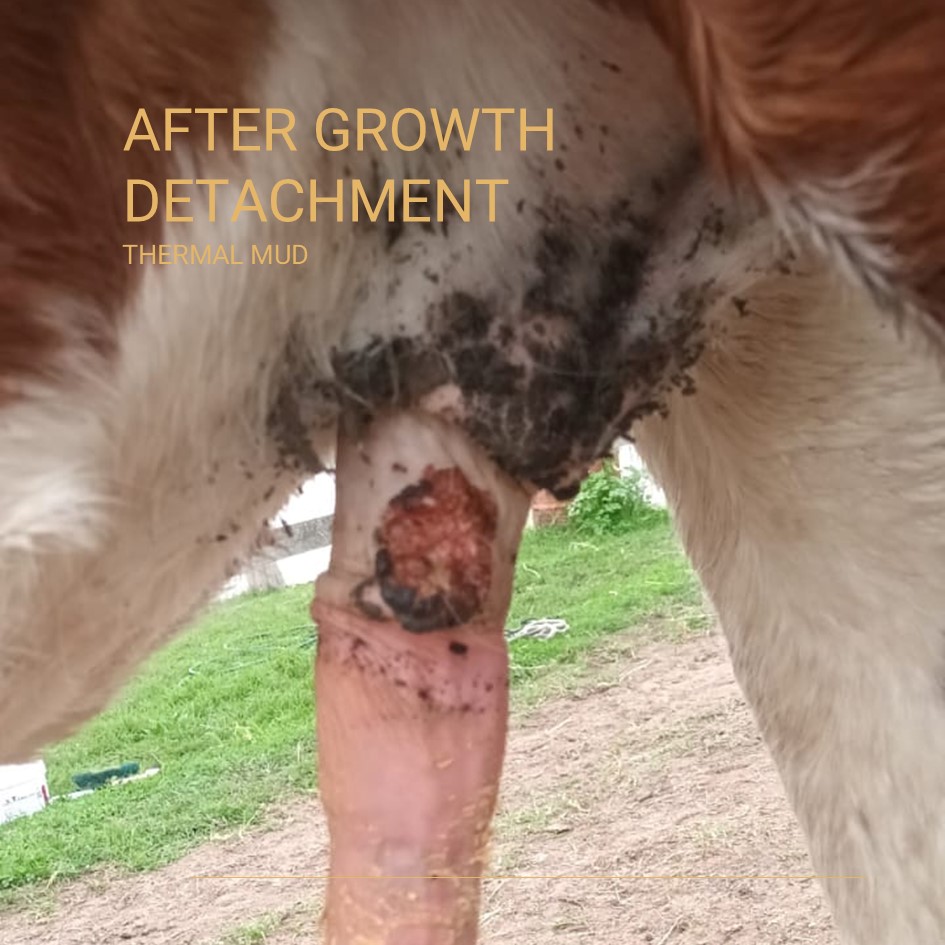
When treating sarcoids with Thermal Mud, the process unfolds in clear stages: in the first week, lesions may appear to grow or swell slightly as the immune system begins to target the abnormal tissue—driven by humic and fulvic acids that help the body distinguish between healthy and diseased cells. This may include some bleeding or discharge as the growth begins to break down. Over the following weeks, crusting, shrinkage, and partial detachment typically occur, followed by the growth falling off completely and healthy skin regenerating beneath. To understand this process in more depth and support your horse through each stage.
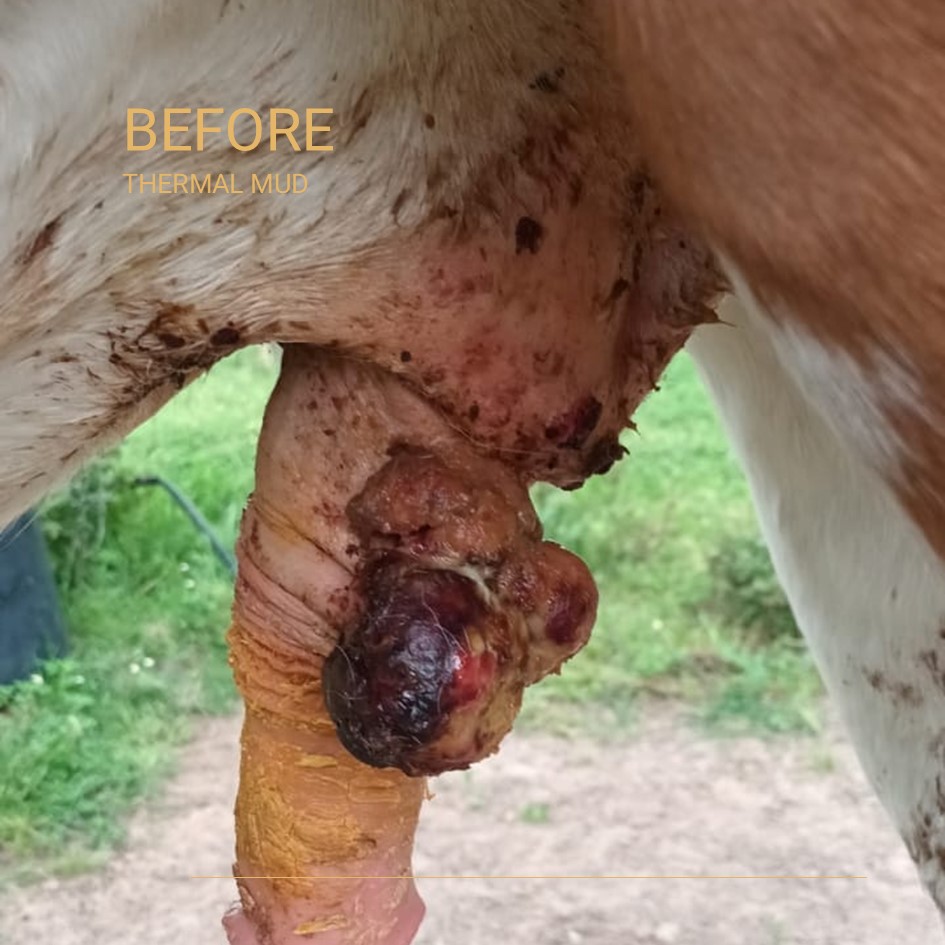
Above is before detachment. Below is after detachment.
Science and anti-inflammatory effects
A 2019 study published in Frontiers in Pharmacology highlighted the anti-inflammatory effects of humic substances, showing that they reduce cytokine expression (such as TNF-α and IL-6) and support modulation of immune response in both humans and animals. These cytokines are central to pain, swelling, and chronic inflammation—common features in overworked muscles, tendon strain, and joint stiffness.
Similarly, a controlled veterinary study involving topical application of humic acid gel on arthritic joints in rats found significant reductions in joint swelling and synovial inflammation within 7–10 days of use. The humic acid-treated group showed greater joint mobility, less inflammatory infiltration in tissue samples, and overall faster recovery compared to untreated controls (PubMed ID: 29478945).
Clay-based carriers used in Thermal Mud help retain localized heat and provide a time-release effect for mineral and microbial components, enhancing their penetration into inflamed tissue. This thermal action—though not geothermally sourced—still raises surface temperature slightly through vasodilation and improved blood flow, which supports detoxification and reduces stiffness.
Together, these mechanisms mirror many of the benefits seen in traditional mud therapy, but without the need for geothermal origin. The result is a natural, biologically active topical solution suitable for managing inflammation and pain in horses, dogs, and livestock—particularly after exertion, during recovery, or when treating chronic conditions.
