

HARNESSING THE COMBINED POWER OF VERMATE AND THERMAL MUD
Sarcoids are the most common skin tumors affecting horses, donkeys, and mules. These benign yet locally invasive growths are strongly associated with infection by bovine papillomavirus types 1, 2, and possibly 13 (BPV1, BPV2, BPV13). The virus infects equine skin cells and causes uncontrolled proliferation of fibroblasts, leading to tumor formation.
Although sarcoids are not contagious between horses, they often develop at sites of previous injury or irritation where the virus can enter the skin more easily. This highlights the importance of careful wound management and skin care in preventing and controlling sarcoid development.
How Thermal Mud and Vermate Work Together
Combining Thermal Mud with Vermate offers a holistic approach to managing sarcoids:
Topical Support with Thermal Mud
Thermal Mud enhances circulation, reduces inflammation, and provides antimicrobial benefits to create an environment conducive to healing. Applied directly, it soothes irritated skin and supports tissue repair.
Internal Support with Vermate
Vermate is administered orally and supports systemic detoxification and immune function, helping the body better manage viral infections and promote overall health.
Synergistic Effects
The combination addresses both local skin health and systemic wellbeing, improving the chances of successful sarcoid management.
Practical Use Recommendations for Sarcoids
Managing sarcoids with Thermal Mud involves understanding the stages the lesion undergoes during treatment and maintaining a consistent care routine. Healing can range from two weeks to several months, depending on the location and severity.
- Initial Application and Early Response (Days 1–7)
- Clean the sarcoid and surrounding skin with running water.
- Apply a thick layer of Thermal Mud over and around the lesion. Dilution can be used to adjust consistency.
- Let the mud dry for at least 30 minutes, then rinse off.
- Repeat once or twice daily.
What to expect:
In this early stage, the lesion may appear to enlarge slightly or become more raised. This is not a negative reaction—it often signals that the mud and internal support are triggering a local immune response. The humic and fulvic acids in both Thermal Mud and Vermate help the body distinguish between healthy and diseased cells, prompting the immune system to push the abnormal growth to the surface.
This is why some sarcoids may appear larger before they shrink or detach. In some cases, bleeding or discharge may occur as the tissue breaks down and drainage begins. This is a typical part of the resolution process and should not be confused with deterioration or infection.
- Intermediate Healing Phase (Weeks 2–4)
- Continue the same routine of cleaning and application.
- Monitor for signs of crusting, oozing, or tissue separation—these are indications the sarcoid is undergoing necrosis.
- Limit trauma from rubbing or insect interference by using a light covering or keeping the area clean and dry.
- The sarcoid may begin to fall off in pieces or shrink as the immune system finishes isolating the abnormal tissue.
- Resolution and Regeneration (Weeks 5–12)
- Healthy tissue begins forming beneath the sarcoid as it detaches.
- You may observe pink granulation tissue or clean, healed skin depending on lesion depth.
- Once the area is fully healed, discontinue mud application but continue monitoring.
- If regrowth is observed, early reapplication may prevent recurrence.
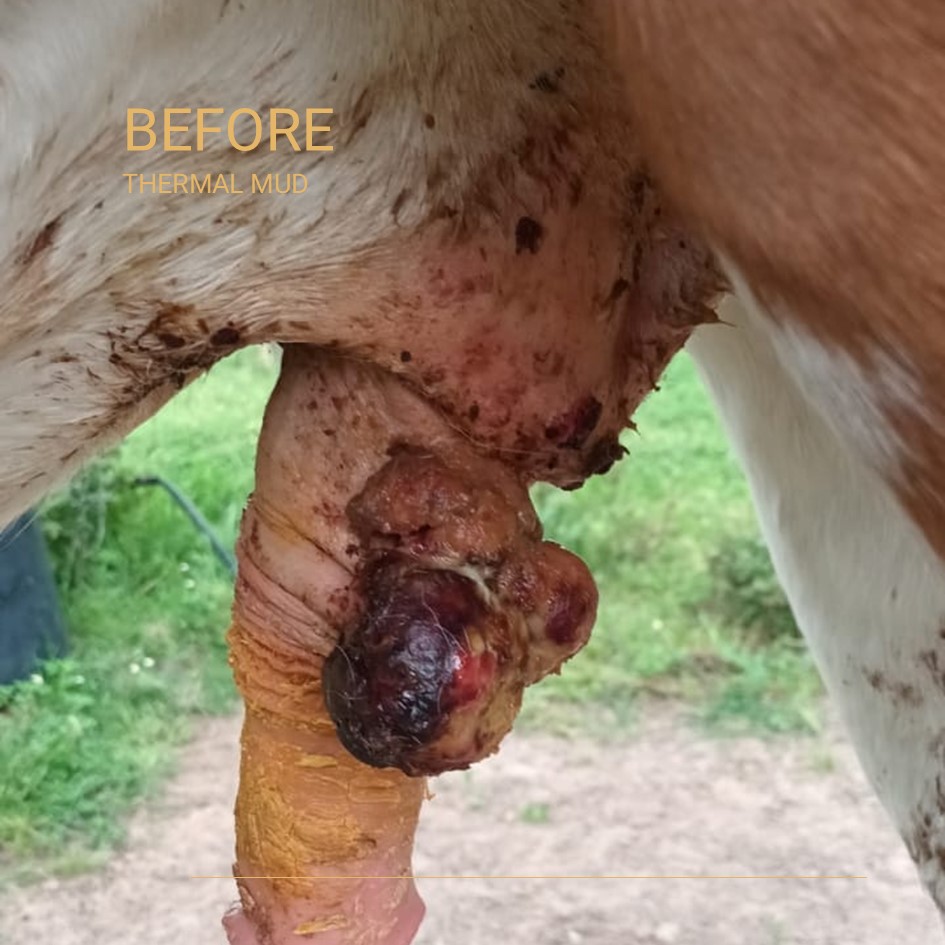
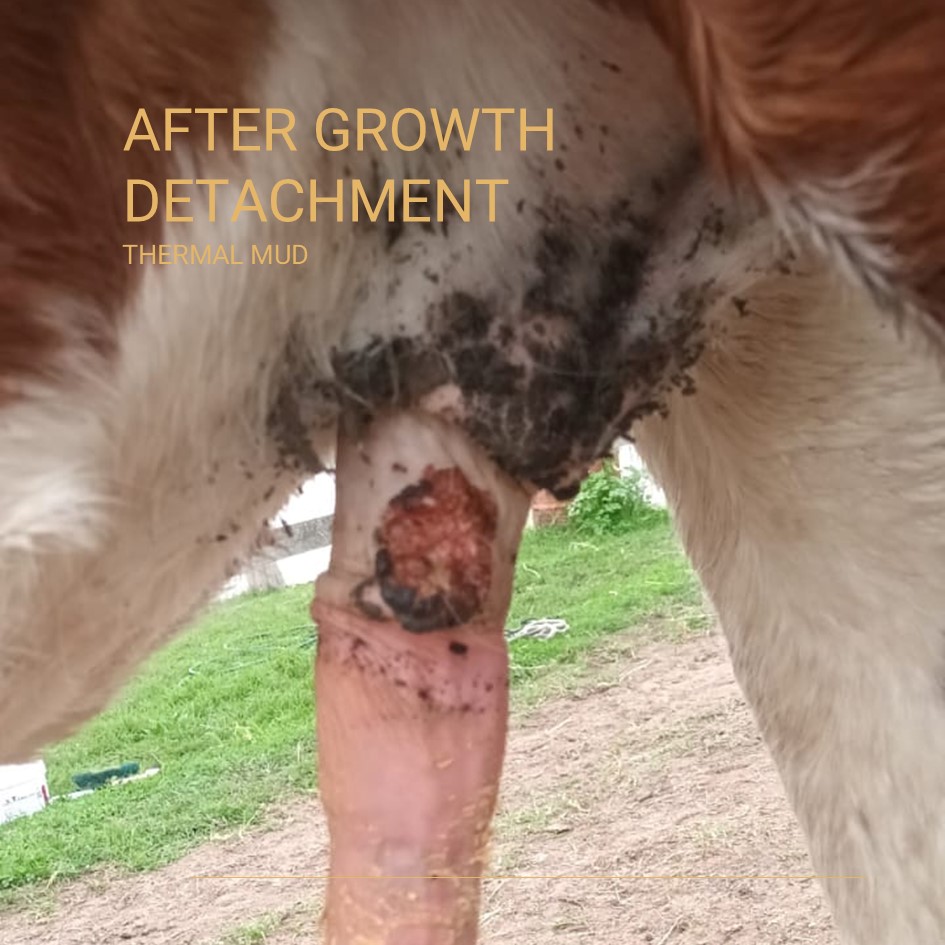
Be Patient
Sarcoids are persistent, virus-driven tumors that require consistent and careful management. When used together, Thermal Mud and Vermate offer a powerful, natural approach helping the body identify and eliminate abnormal tissue, while supporting healthy skin regeneration. The process may involve swelling, bleeding, or detachment, but these are all signs that the immune system is doing its job. With continued use and veterinary guidance, this protocol can improve outcomes and quality of life for horses affected by sarcoids.
Additional Care Tips
Combine with Vermate to support immune detoxification and tissue repair internally.
Always consult a veterinarian for diagnosis, especially before treating rapidly changing or ulcerated lesions.
Patience and consistency are key—visible progress may take several weeks depending on the individual case.
