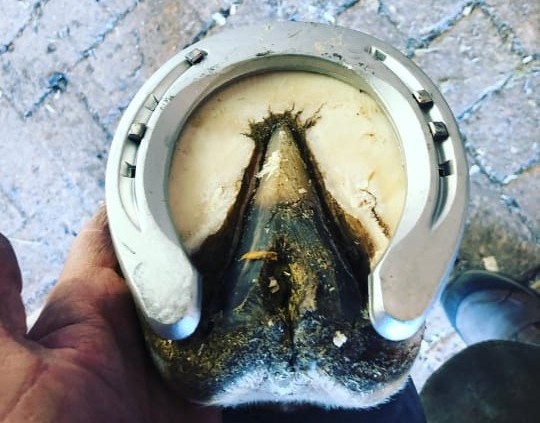
You’ve invested in a quality hoof supplement, your horse is receiving premium feed, regular farrier care, and all the nutrients that should support strong, healthy hooves. Yet the hoof walls still crack, the shoes don’t stay on, the feet chip easily, or hoof growth seems unusually slow. Despite everything you’re doing, the hooves simply don’t seem to improve.
If this sounds familiar, the question may not be what you’re feeding, it may be what your horse is actually able to use from what you are feeding.
Strong Hooves Start Long Before the Hoof
Let’s look at how your horses’ hooves work. As I’m sure you are aware, a horse’s hoof is constantly growing. The new hoof horn is produced from living tissue at what is known as the coronary band. This growth uses nutrients your horse absorbs from the digestive tract.
For healthy hoof growth, the body requires an ongoing supply of nutrients, including:
-
- High-quality protein and essential amino acids
- Biotin
- Zinc
- Copper
- Manganese
- Sulphur-containing compounds
- Vitamins and trace minerals
Many hoof supplements provide these nutrients in carefully balanced amounts. But supplying nutrients is only one part of the equation.
FEEDING NUTRIENTS ISN'T THE SAME AS USING THEM
Imagine filling a fuel tank with premium fuel, only to realise the engine cannot deliver that fuel where it needs to go. That same thinking can be applied to how nutrition works in a body. You can feed your horse a brilliant diet, but if digestion and absorption are compromised, the body may struggle to use the nutrients in the feed or supplements.
Great diet, but bad nutrient absorption, how does that work? Without going into a scientific story, we can highlight these as typical influencers:
-
-
-
-
-
- The health and balance of the gut microbiome affecting digestive efficiency
- The condition of the intestinal lining that could be compromised through issues like stress
- Competition between minerals during absorption for example, too much iron can interfere with zinc and copper absorption, or excess calcium can reduce the availability of zinc, magnesium, and phosphorus to the body, or high levels of zinc can interfere with copper absorption if the diet is unbalanced
- Overall health and physiological stress naturally play a role
-
-
-
-
NUTRIENT ABSORPTION IS ONE REASON WHY TWO HORSES ON THE SAME FEEDING PROGRAMME CAN DEVELOP VERY DIFFERENT HOOF QUALITY
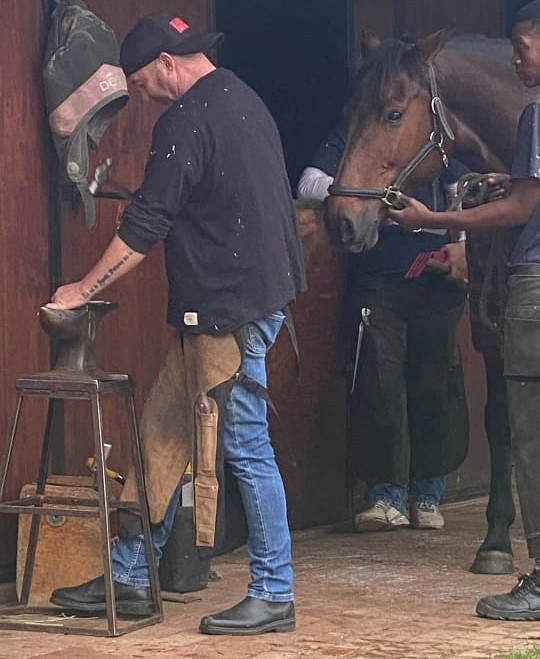
“As a farrier, healthy feet are the foundation of every horse’s soundness and performance. Over the years, I’ve worked on horses from different disciplines, and one thing that has stood out to me is the positive difference I’ve seen in horses that have been on Vermate consistently.
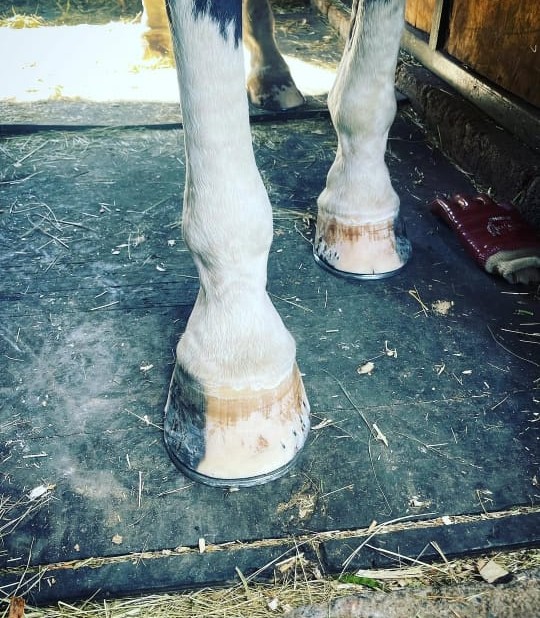
The hoof walls are noticeably stronger, with less cracking, chipping and flaring. The quality of new hoof growth is excellent, and the feet seem to hold their shape much better between farrier visits. Shoes also tend to stay on more consistently because the hoof is stronger and provides better support.
No supplement is a miracle on its own. Good nutrition, correct trimming or shoeing, and proper management all work together. But Vermate has certainly become a product that I have confidence in.
It’s rewarding to see horses growing healthier, stronger feet that are better equipped to cope with the demands of training and competition.
From a farrier’s perspective, when the hoof quality improves, it makes my job easier and gives the horse a much better foundation for long-term soundness.” – Peter Dunias, Master Farrier
Thanks to Peter for these pics of great hoof quality.
Hoof Growth Takes Time
One of the biggest misconceptions is expecting rapid improvement.
A horse’s hoof grows slowly, typically around 6 to 10 millimetres per month, depending on the individual, nutrition, season and overall health. Because new hoof is continually growing from the coronary band, improvements become visible gradually as healthier horn replaces older, damaged hoof. So, consistency is essential for hoof care.
Looking Beyond the Hoof
When hoof quality remains poor despite supplementation, it may be worth looking beyond the feet themselves. Ask whether your horse is digesting and absorbing nutrients efficiently, whether the gut microbiome is well balanced, and whether the digestive system is providing the foundation needed to make the most of the diet you’re feeding.
Where Vermate Fits
Vermate is not a hoof supplement. It is a biological solution that supports gut microbiome balance, one of the key systems every hoof depends on. By helping to support gut health, digestive efficiency, nutrient utilisation, and normal immune function, Vermate complements a well-balanced nutrition programme.
When the digestive system functions efficiently, the body is better positioned to make use of the nutrients already present in the horse’s diet, including those required for healthy hoof growth.
Strong, resilient hooves are built from the inside out
When the digestive system functions efficiently, the body is better positioned to make use of the nutrients already present in the horse’s diet, including those required for healthy hoof growth. Strong, resilient hooves are built from the inside out.